



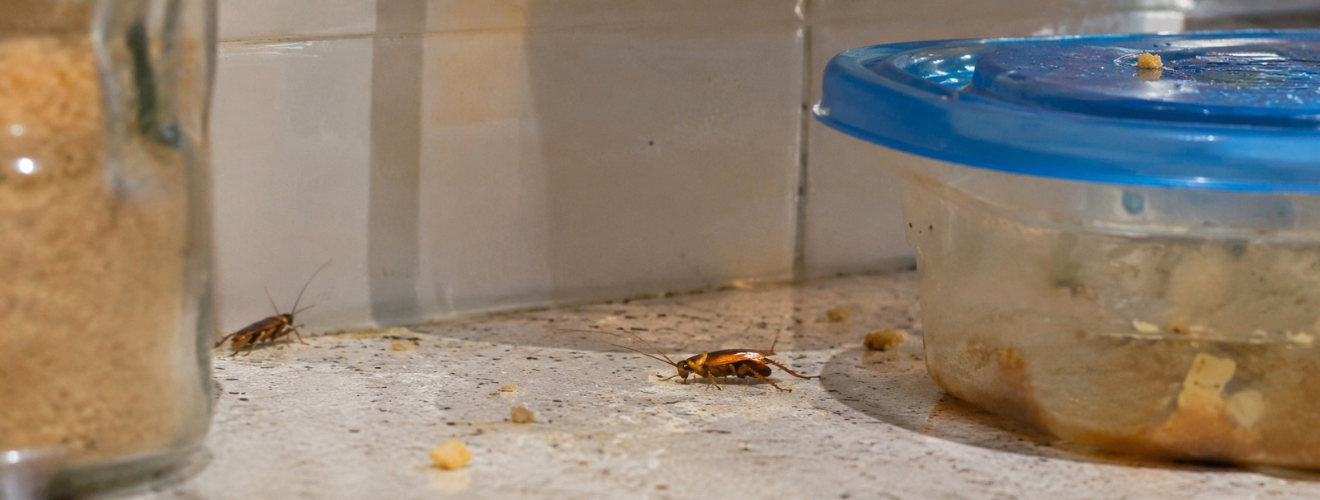
German cockroaches in a Youngsville kitchen usually mean a breeding population has already formed somewhere inside the home. These roaches live their entire lives indoors, reproduce quickly, and hide in places that are hard to reach with household sprays. A problem that starts with a few roaches near the sink can spread to every cabinet in the kitchen within a few months. At Dave’s and Kevin’s Pest Control, our pest control service includes targeted treatment for German cockroaches. Here is how to recognize them, how they got into your home, and what it takes to get rid of them.
How to Tell German Cockroaches Apart From Other Roaches
Youngsville homeowners see several kinds of roaches, so identifying the type is the first step. German cockroaches are small, usually about half an inch long as adults. They are light brown or tan, and they have two dark stripes running lengthwise on the area just behind the head. They have wings, but they mostly run rather than fly.
The large, reddish-brown roaches that many people call palmetto bugs are American cockroaches. Those roaches usually live outdoors and wander in from mulch, drains, and crawl spaces. German cockroaches are a different problem because they live and breed inside the house. A treatment that works for outdoor roaches will do very little for German cockroaches living in your kitchen cabinets.
Signs of a German Cockroach Problem
German cockroaches are most active at night, so many homeowners notice other signs before they see many live roaches. Common signs include:
- Roaches running when you turn on the kitchen light at night: They scatter quickly toward cracks and gaps.
- Small dark droppings: These look like ground pepper or coffee grounds and collect in cabinet corners, drawers, and along the backs of shelves.
- Egg cases: These are small, light brown capsules about a quarter of an inch long. You may find empty ones in cabinets or behind appliances.
- Shed skins: Young roaches shed their skins as they grow, and these pale skins collect where roaches hide.
- A musty odor: Large infestations can produce a noticeable stale, oily smell.
- Roaches seen during the day: Daytime sightings often mean the hiding spots are crowded, which points to a larger population.
How German Cockroaches Get Into Youngsville Homes
German cockroaches are usually carried into the home. Common sources include grocery bags, cardboard boxes from stores or deliveries, used appliances, secondhand furniture, and electronics. They can also travel in luggage, backpacks, and purses from a place that has an infestation.
This is true even for newer homes. Many Youngsville neighborhoods are newly built, and homeowners are sometimes surprised to find roaches in a house that is only a few years old. Because these roaches arrive in belongings, the age or cleanliness of the home does not keep them out.
Why They Spread So Quickly
German cockroaches reproduce faster than most household pests. A female carries her egg case attached to her body until shortly before the eggs hatch, which protects the eggs while she hides. Each egg case holds roughly 30 to 40 eggs. Under warm conditions with food and water nearby, young roaches can grow into adults and begin reproducing within a few months.
That speed is why a small problem can grow into a large infestation over a single season. It is also why waiting to see whether the roaches go away on their own usually makes the problem harder to treat.
Why German Cockroaches Are a Health Concern
German cockroaches walk through drains, garbage, and food crumbs, then across counters, dishes, and food packaging. They can carry bacteria onto surfaces where food is prepared. Their droppings, saliva, and shed skins also contain allergens that can trigger allergy symptoms and asthma, especially in children.
What Treatment Involves
Getting rid of German cockroaches takes a focused indoor approach. A technician starts by inspecting the kitchen and bathrooms to find where the roaches are hiding. Common spots include the gaps behind and under appliances, cabinet hinges, the space under the sink, and electrical outlets near the counters.
Treatment usually includes baits placed directly into the cracks and gaps where roaches live, along with products that interrupt their growth and reproduction. Follow-up visits are an important part of the process. Some eggs hatch after the first treatment, and the young roaches have to be treated before they can reproduce.
Homeowners play a role as well. Keeping food sealed, cleaning up crumbs and grease, fixing leaks under sinks, and removing cardboard boxes takes away food, water, and hiding places. These steps help treatment work faster, but they will not eliminate an established infestation on their own.
Dave’s and Kevin’s Pest Control is a local, family-owned company with an office in nearby Broussard, and our team includes a Board Certified Entomologist. If you are seeing German cockroaches in your Youngsville home, schedule a free inspection so we can find where they are hiding and start treatment.