


A Pest Problem in One Unit May Not Stay in One Unit
Multi-family pest management becomes complicated because individual units are connected to a larger property.
Cockroaches may travel through wall voids, plumbing, or utility pathways.
Bed bugs can be introduced by residents or belongings.
Rodents may move through attics, garages, crawlspaces, and exterior structures.
Ants may originate outdoors and enter multiple units.
Dumpster conditions can influence pest activity across an entire building.
That means treating one apartment without understanding the surrounding property may not be enough.
Successful multifamily pest control often requires communication between the pest-control provider, management, maintenance personnel, and residents.


Get Your Free Pest Control Quote
Tell us what you’re dealing with and a member of the Dave’s and Kevin’s team will help you determine the right solution for your facility.
Manage the Property, Not Just the Complaint
The strongest multi-family pest programs consider units, common areas, exterior conditions, and resident behavior together.

Individual Units
Food, moisture, clutter, plumbing, resident belongings, pets, and housekeeping can all influence pest conditions.
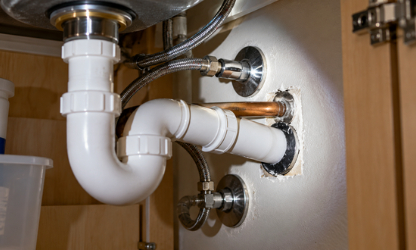
Shared Walls & Utility Pathways
Pests may move between units through plumbing penetrations, wall voids, utility chases, attics, and other connected spaces.
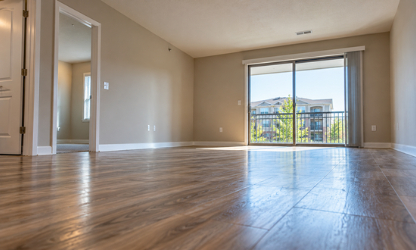
Vacant Units
Unoccupied apartments may allow leaks, pest activity, or maintenance conditions to go unnoticed until a new resident moves in.
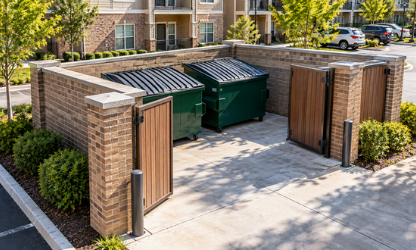
Dumpsters & Waste Areas
High-volume residential waste can attract roaches, flies, rodents, and other pests.
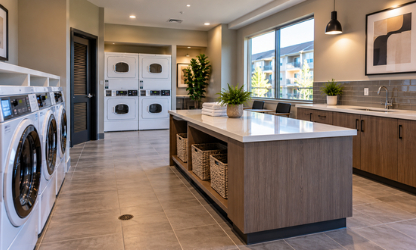
Common Areas
Laundry rooms, clubhouses, mail areas, offices, storage rooms, and shared facilities can all develop pest activity.
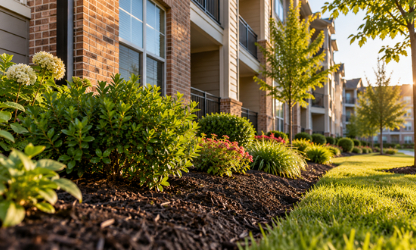
Landscaping & Exterior Areas
Mulch, irrigation, shrubs, standing water, lighting, and building exteriors can affect ants, mosquitoes, spiders, rodents, and other pests.
Pest Management That Works With Property Management

Evaluate the Property
We look at building layout, known pest problems, unit complaints, common areas, dumpsters, landscaping, structural access, and other property-wide risks.


Determine Whether the Problem Is Isolated or Connected
One complaint may involve one unit.
Or it may indicate activity affecting neighboring units, shared plumbing, a common wall, or another portion of the property.
Understanding that distinction is important.


Coordinate Treatment
Management and residents may need clear instructions concerning access, preparation, sanitation, or follow-up.
Communication can be just as important as treatment.


Address Exterior and Common-Area Conditions
Pest activity around dumpsters, landscaping, building perimeters, laundry rooms, storage spaces, and vacant units can influence what happens inside occupied apartments.


Monitor Repeat Problem Areas
Recurring activity in the same building, stack of units, dumpster area, or structural location can indicate a condition that deserves additional attention.

Free Commercial Facility Pest Audit
Schedule a no-obligation commercial pest inspection and receive a review of common pest risk areas. Including: entry points, sanitation concerns, storage zones, exterior conditions and more!
Why Integrated Pest Management Matters in Multi-Family Housing
Multi-family properties demonstrate why simply treating individual pest sightings often does not solve the entire problem.
Imagine repeatedly treating one unit for cockroaches while activity continues in the neighboring apartment, plumbing penetrations remain open, and a leak behind the wall provides moisture.
Or treating ants inside units while exterior colonies continue developing around landscaping.
Integrated Pest Management looks at the property as a connected system.
- Inspection.
- Resident cooperation.
- Sanitation.
- Moisture correction.
- Exterior control.
- Structural exclusion.
- Monitoring.
- Targeted treatments.
Each part contributes to a more effective long-term program.
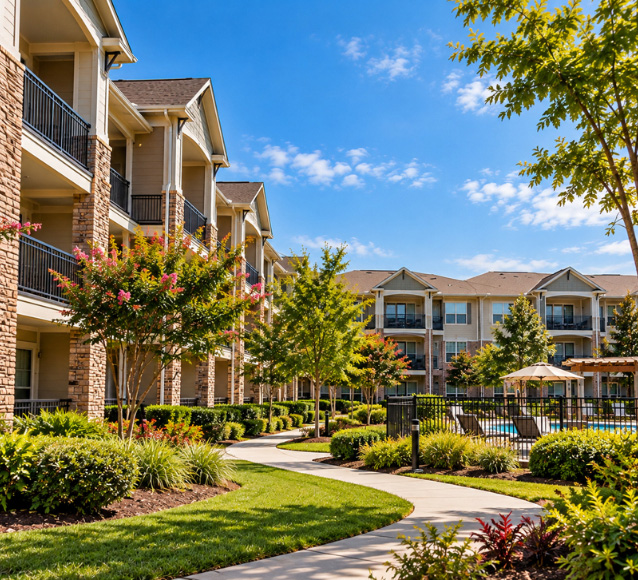
Common Multi-family Pests
Pest Problems Apartment Communities Frequently Encounter
Cockroaches
Shared walls, plumbing, kitchens, moisture, trash, and unit-to-unit movement can make roach control challenging.
Bed Bugs
Bed bugs may be introduced through residents, guests, travel, furniture, or belongings and require careful identification and management.
Rodents
Rats and mice may use garages, attics, crawlspaces, dumpsters, utility areas, and structural openings.
Ants
Exterior nesting activity and abundant food and water sources can result in recurring complaints across multiple units.
Fleas
Pets, wildlife, vacant units, and previously occupied spaces can all contribute to flea problems.
Mosquitoes
Standing water, drainage, landscaping, and exterior common areas may support mosquito activity.
Management & Resident Cooperation
Pest Management Works Better When Everyone Understands Their Role
Property management can provide professional service.
But residents and maintenance personnel often influence the conditions inside individual units.
Residents may need to follow preparation instructions.
Maintenance teams may need to repair leaks or structural openings.
Management may need to coordinate access to adjacent units.
Trash practices may need improvement.
Vacant apartments may need inspection.
When responsibilities are clearly communicated, the pest-management program becomes easier to implement consistently.
Vacant Units & Turnover
Unit Turnover Is an Opportunity to Find Problems Early
Vacant apartments provide an excellent opportunity to inspect areas that may be difficult to evaluate when a resident is occupying the unit.
Before a new tenant moves in, management can look for:
- Pest evidence
- Leaks
- Plumbing openings
- Damaged seals
- Droppings
- Roach activity
- Fleas
- Signs of rodents
- Conditions requiring maintenance
Finding and correcting these issues during turnover can prevent complaints after occupancy.
Multi-Family Pest Control for South Louisiana Properties
Apartment and HOA communities in Lafayette operate in an environment where insects, rodents, mosquitoes, and other pests can remain active for much of the year.
Heavy rain can push pests toward structures.
Warm temperatures support exterior populations.
Landscaping and irrigation create moisture.
Dumpster areas receive continuous use.
Residents and deliveries create constant movement.
A good pest-management program needs to account for all of those factors—not simply respond to individual work orders.
Why Choose Dave’s & Kevin’s
Local Pest Management for Property Managers




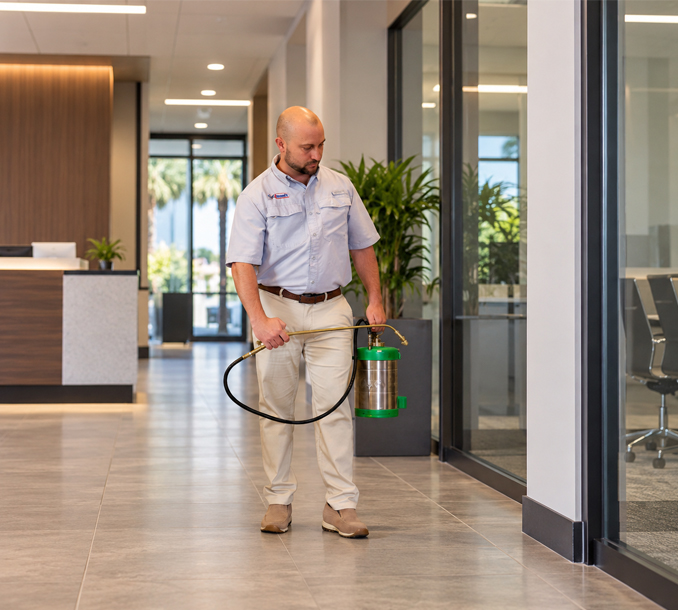

Serving Lafayette & Acadiana Since 1962
Local knowledge of the pests and conditions affecting South Louisiana properties.

Property-Wide Thinking
We consider units, common areas, exterior environments, and structural conditions.

Integrated Pest Management
Prevention and correction work alongside treatment.

Management Coordination
Clear communication helps make multi-unit service more effective.
Serving Lafayette & Acadiana Since 1962
Local knowledge of the pests and conditions affecting South Louisiana properties.
Property-Wide Thinking
We consider units, common areas, exterior environments, and structural conditions.
Integrated Pest Management
Prevention and correction work alongside treatment.
Management Coordination
Clear communication helps make multi-unit service more effective.
Apartment & HOA Pest Control Throughout Lafayette & Acadiana
Apartment & HOA Pest Control Throughout Lafayette & Acadiana
Dave’s & Kevin’s provides commercial pest-control services for apartment communities, multifamily properties, condominiums, HOAs, and managed residential properties throughout Lafayette and surrounding Acadiana communities.
Your Local Pest Control Company Since 1962
More than six decades in business doesn’t happen without taking care of customers. See what homeowners throughout Lafayette and Acadiana have to say about their experience with Dave’s and Kevin’s Pest Control.
Read More Reviews


Frequently Asked Questions About Multi-Family Pest Control
Can pests move from one apartment to another?
Yes. Cockroaches, rodents, bed bugs, ants, and other pests may move through shared walls, plumbing pathways, utility spaces, hallways, or belongings.
Should neighboring units be inspected when one apartment has a pest problem?
Depending on the pest and situation, inspection of nearby units may help determine whether activity extends beyond the original complaint.
Why are dumpsters such a problem at apartment communities?
Large volumes of food waste and trash can attract flies, cockroaches, rodents, and other pests near residential buildings.
How important is resident cooperation?
Very important. Access, sanitation, preparation, reporting, and follow-up can strongly affect the success of pest-control service.
Should vacant units be inspected?
Yes. Vacant units can allow moisture or pest problems to remain unnoticed, and turnover provides an opportunity to correct conditions before new occupancy.
How do bed bugs spread in apartment communities?
They can be introduced through people, luggage, furniture, belongings, and other movement between locations.
Can landscaping affect pest problems?
Yes. Dense vegetation, mulch, irrigation, standing water, and plants touching buildings can influence insects, mosquitoes, rodents, and other pests.
Give Residents Fewer Reasons to Call the Office About Pests
A strong multi-family pest-management program protects more than individual units.
It supports residents, maintenance teams, property managers, common areas, and the overall condition of the community.
Let Dave’s & Kevin’s evaluate your property and help develop a coordinated pest-management strategy.
Request a Multi-Family Pest Evaluation