


In a Restaurant, One Pest Can Become Everyone’s Problem
A cockroach in a storage room is a pest problem.
A cockroach seen by a customer is a reputation problem.
Restaurants have very little margin for error because pest activity can affect customer confidence, employee morale, sanitation, and day-to-day operations.
The challenge is that restaurants naturally contain many of the things pests are looking for.
Food arrives every day.
Doors open constantly.
Grease accumulates.
Floor drains stay moist.
Trash is generated throughout the day.
Equipment creates warm protected spaces.
Food residue may collect where routine cleaning cannot easily reach.
That is why restaurant pest control has to go far beyond treating the bug someone happened to see.

Get Your Free Pest Control Quote
Tell us what you’re dealing with and a member of the Dave’s and Kevin’s team will help you determine the right solution for your facility.
The Entire Restaurant Is Part of the Pest-Control Program
From the receiving door to the dumpster, every part of the operation can influence pest activity.
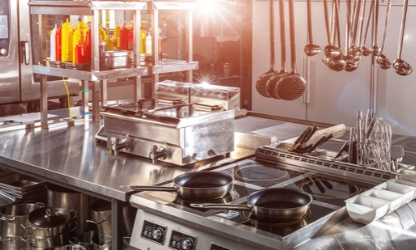
Kitchens & Cooking Equipment
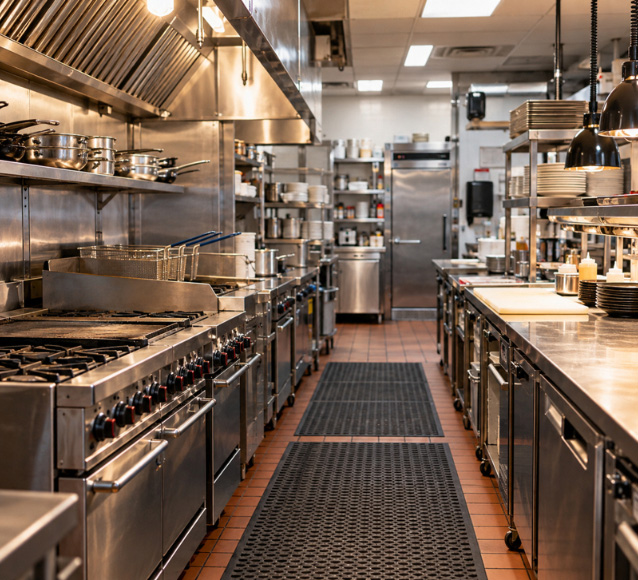
Heat, grease, food residue, moisture, and protected spaces beneath or behind equipment can support significant pest activity.
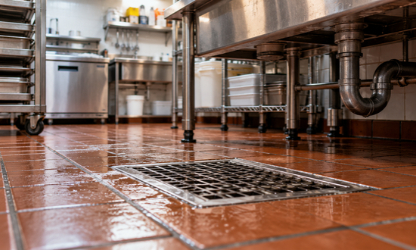
Floor Drains
Drains can provide moisture, organic material, and breeding conditions for flies and other pests if they are not properly maintained.
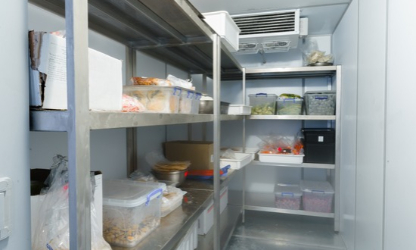
Food Storage
Dry storage, shelving, cardboard, spilled ingredients, and incoming products should be inspected and managed carefully.
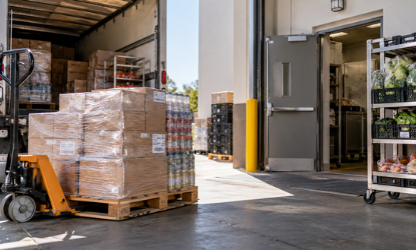
Receiving Areas
Pests may be introduced with pallets, boxes, food products, beverages, and other deliveries.
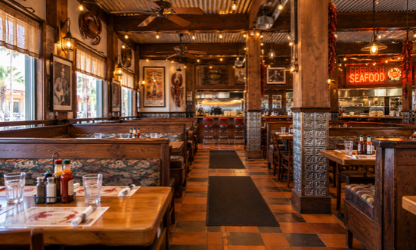
Dining & Customer Areas
Pests seen by customers can quickly become a reputation issue even if the underlying infestation began somewhere else.
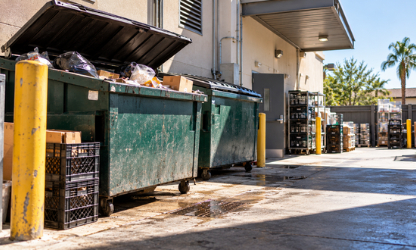
Dumpsters & Waste Areas
Waste can support flies, roaches, rodents, and other pests before they move toward the structure.
How We Manage Restaurant Pest Problems
Restaurant Pest Control Starts Behind the Scenes

Inspect the Entire Operation
We examine kitchens, storage, drains, receiving, employee areas, dining spaces, waste areas, exterior doors, and other locations that may contribute to pest activity.


Identify Food, Water and Shelter
Pests need resources.
Finding grease, moisture, food residue, leaking equipment, trash, structural openings, or hidden harborages helps explain why activity is occurring.


Target Active Pest Areas
Treatment should focus on the pest and the locations supporting it rather than relying on broad, repetitive applications.


Recommend Corrective Actions
Sanitation, drainage, storage, structural repairs, waste practices, or equipment cleaning may all play a role in preventing reinfestation.


Monitor the Restaurant Over Time
Restaurant conditions change every day.
Deliveries, cleaning, employee practices, weather, kitchen activity, and waste all affect pest pressure.
Ongoing monitoring helps identify trends early.

Free Commercial Facility Pest Audit
Schedule a no-obligation commercial pest inspection and receive a review of common pest risk areas. Including: entry points, sanitation concerns, storage zones, exterior conditions and more!
Why Integrated Pest Management Is Essential in Restaurants
Restaurants are one of the clearest examples of why IPM matters.
Imagine treating cockroaches every week while grease remains beneath equipment, a leaking pipe provides water, cardboard accumulates in storage, and gaps around plumbing provide shelter.
- The visible insects may decrease temporarily.
- But the environment still supports the infestation.
- Integrated Pest Management addresses both sides of the problem.
- Professional treatment controls active pests.
- Inspection identifies the source.
- Sanitation reduces food.
- Repairs eliminate water and access.
- Storage improvements reduce shelter.
- Monitoring tells us whether the program is working.
- The goal is not simply to keep applying product.
- The goal is to make the restaurant increasingly difficult for pests to live in.
Common Restaurant Pests
The Pests Restaurants Cannot Afford to Ignore
Cockroaches
Kitchens provide roaches with warmth, food, water, and protected hiding locations.
Rodents
Food storage, dumpsters, structural openings, deliveries, and exterior conditions can attract rats and mice.
Flies
Floor drains, organic material, waste, spills, produce, doors, and sanitation conditions can all contribute to fly populations.
Ants
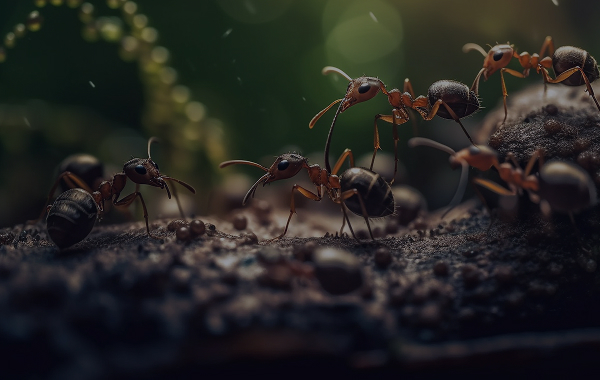
Food and moisture can quickly bring ants into kitchens, serving areas, and other portions of a restaurant.
Stored-Product Pests
Dry goods and other stored food products can sometimes support pest activity if contaminated products enter the facility or storage practices allow an infestation to spread.
Occasional Invaders
Spiders, stinging insects, and other pests may also become problems around entrances, patios, exterior lighting, landscaping, and waste areas.
Sanitation & Prevention
Pest Control and Restaurant Sanitation Have to Work Together
Professional pest control cannot replace good sanitation.
And sanitation alone may not eliminate an established pest population.
The strongest program combines both.
Kitchen staff should clean beneath and around equipment whenever possible.
Food spills should be corrected quickly.
Dry goods should be properly stored.
Floor drains should be maintained.
Trash should be removed and waste areas kept as clean as practical.
Leaking pipes and equipment should be repaired.
Exterior doors should close correctly.
Incoming deliveries should be monitored.
When pest-control professionals and restaurant staff work together, long-term results improve dramatically.
Receiving & Delivery Control
Sometimes the Pest Arrives With the Delivery
Restaurants receive a constant flow of products from outside the facility.
- Boxes.
- Produce.
- Dry goods.
- Beverages.
- Paper products.
- Equipment.
- Pallets.
Any of these can potentially introduce pests or pest evidence.
Receiving areas deserve regular attention because preventing a pest from becoming established is much easier than controlling an infestation after it spreads into storage or kitchen areas.
Restaurant Pest Control for Louisiana Conditions
Restaurants in South Louisiana face pest activity throughout much of the year.
Heat and humidity can support insects.
Heavy rain can drive pests toward structures.
Warm temperatures help exterior populations remain active.
Waste areas, outdoor dining, landscaping, and frequently opened doors create additional pressure.
That makes prevention especially important.
A restaurant pest-management program should be designed for the realities of operating in Lafayette and Acadiana—not based on conditions hundreds of miles away.
Why Choose Dave’s & Kevin’s
Protect the Business You Worked Hard to Build





Local Experience
Serving Lafayette and Acadiana since 1962.

Restaurant-Focused Inspection
Kitchens, drains, storage, receiving, waste, and customer areas all receive different attention.

Integrated Pest Management
We combine prevention and corrective action with targeted treatment.

Commercial Programs
Service built around the operation and pest risks of the restaurant.
Local Experience
Serving Lafayette and Acadiana since 1962.
Restaurant-Focused Inspection
Kitchens, drains, storage, receiving, waste, and customer areas all receive different attention.
Integrated Pest Management
We combine prevention and corrective action with targeted treatment.
Commercial Programs
Service built around the operation and pest risks of the restaurant.
Restaurant Pest Control Throughout Lafayette & Acadiana
Restaurant Pest Control Throughout Lafayette & Acadiana
Dave’s & Kevin’s provides commercial pest-management services for restaurants, cafés, commercial kitchens, food-service operations, and related hospitality businesses throughout Lafayette and surrounding Acadiana communities.
Your Local Pest Control Company Since 1962
More than six decades in business doesn’t happen without taking care of customers. See what homeowners throughout Lafayette and Acadiana have to say about their experience with Dave’s and Kevin’s Pest Control.
Read More Reviews


Frequently Asked Questions About Restaurant Pest Control
Why are cockroaches so common in restaurants?
Restaurants provide warmth, food, water, grease, drains, storage, and numerous protected hiding areas. That makes prevention and sanitation especially important.
Why do flies keep appearing even after we kill the adults?
The breeding source may still be present. Drains, organic material, waste, spills, or other conditions can continue producing flies.
Can deliveries introduce pests?
Yes. Boxes, pallets, produce, packaged food, and other incoming products can sometimes transport pests into a facility.
How important are floor drains?
Very important. Drains can hold moisture and organic material and may contribute to certain fly and cockroach problems.
Will pest control alone solve a restaurant infestation?
Treatment is important, but sanitation, moisture correction, food storage, waste management, and structural conditions may also need attention.
How often should a restaurant receive pest service?
The appropriate frequency depends on the facility, food volume, operating conditions, pest history, sanitation, surrounding environment, and risk level.
Why should dumpsters be part of the pest program?
Exterior waste can attract rodents, flies, cockroaches, and other pests that may eventually move toward the restaurant.
Don't Let a Pest Problem Reach the Dining Room
The best time to address restaurant pests is before a customer ever knows they are there.
Let Dave’s & Kevin’s evaluate your kitchen, storage, receiving, drains, waste areas, and exterior conditions and develop a pest-management program around your operation.
Request a Restaurant Pest Evaluation