



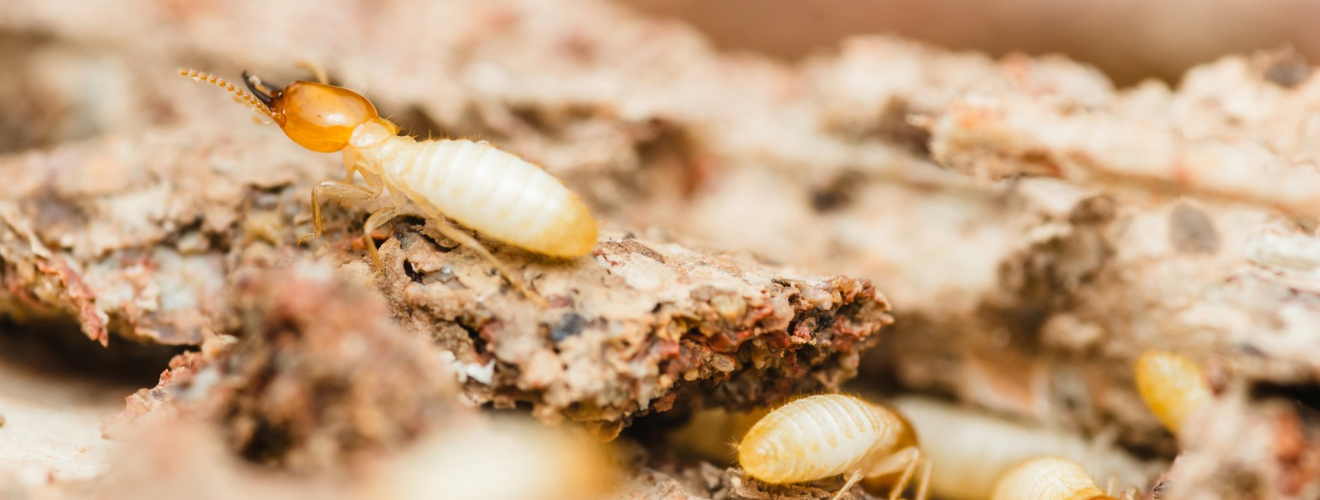
A termite inspection is a close examination of a home’s foundation, wood, and surrounding soil to find live termites, signs of past damage, and the conditions that attract termites in the first place. In Louisiana, where termites stay active for most of the year, an inspection is one of the most practical ways to protect a home before serious damage happens. At Dave’s and Kevin’s Pest Control, our termite control service begins with a thorough inspection of the inside and outside of the home. Here is what that inspection covers, what the results mean, and how often Louisiana homeowners should schedule one.
Why Inspections Are So Important in Louisiana
Louisiana’s warm, wet climate supports two types of subterranean termites. Native subterranean termites live in the soil and travel into homes through mud tubes they build along foundations. Formosan termites, an invasive species established across South Louisiana, form much larger colonies. Formosan termites can also build nests above the ground when they have a steady source of water, such as a roof leak or a slow plumbing leak inside a wall.
Both types work out of sight. Termites eat wood from the inside, so the outer surface often looks normal even when the wood underneath has been hollowed out. Many homeowners do not know they have termites until they see a swarm in the spring or find damage during a remodel. A professional inspection is designed to find the problem earlier.
What the Inspector Checks Outside the Home
The outside of the house is where most subterranean termites get in, so the inspector starts there. They walk the full perimeter and look for mud tubes running up the slab or piers. These tubes are about the width of a pencil, and termites use them to travel between the soil and the wood of the house while staying protected from dry air.
The inspector also looks for wood that touches the soil, such as fence posts attached to the house, wooden steps, or trim that extends to the ground. They check for mulch or soil piled high against the foundation, which can hide termite tubes and allow termites to reach the house without being seen. Standing water, leaking faucets, and gutters that empty against the slab are noted as well, since moisture draws termites toward the home.
What the Inspector Checks Inside the Home
Inside, the inspector examines baseboards, door frames, window frames, and any wood that sits close to the slab. Garages get special attention because the walls there often have exposed wood and concrete joints. Bathrooms are another important area. Many slab homes have a bath trap, which is an opening in the slab under the tub where the drain passes through. Termites can travel up through that opening into the wall.
The inspector will also look for discarded wings near windows and doors, small holes or blisters in drywall, and wood that sounds hollow when tapped. In homes that may have Formosan termites, the attic and the area around the roofline are checked for moisture and signs of an above-ground nest.
The Tools That Help Find Hidden Termites
Termites are often hidden inside walls, so inspectors use equipment to find what they cannot see. Our inspectors use thermal imaging cameras, which show temperature differences behind walls that can point to termite activity or moisture. We also use termite detectors and moisture meters. A moisture meter is especially useful in Louisiana, because damp wood is where termite problems often start. These tools help an inspector decide which areas need a closer look, though the final findings still come from a trained person examining the home.
Routine Inspections and Wood Destroying Insect Reports
There are two main reasons a homeowner schedules a termite inspection. The first is routine protection. A routine inspection checks a home you already own for termites and for conditions that could lead to an infestation.
The second is a real estate transaction. A Wood Destroying Insect Report, often called a WDIR, is a formal inspection report used when a home is being sold or refinanced. In Louisiana, a WDIR can only be issued for a sale or refinance. At Dave’s and Kevin’s, these inspections are performed by a certified and licensed inspector. Realtors and homeowners can contact us directly to schedule one.
What Happens After the Inspection
Once the inspection is finished, the inspector will explain what they found. If termites are active, they will walk you through the treatment options. Dave’s and Kevin’s offer the Sentricon baiting system, which uses monitored bait stations around the home, as well as liquid soil treatments that create a treated zone in the soil around the foundation.
Even when no termites are found, the inspector may point out conducive conditions. These are problems around the home that make an infestation more likely, such as wood rot, poor drainage, or soil piled too high against the slab. Some of these can be fixed by the homeowner. Others may need a contractor, landscaper, or plumber. Fixing them lowers the chance of termites and helps keep a termite warranty valid.
How Often Louisiana Homes Should Be Inspected
Homes under a termite protection plan are inspected on a regular schedule as part of that plan. If your home is not protected, an inspection once a year is a sensible minimum in South Louisiana. Scheduling it in late winter, before termite swarms begin in the spring, gives you time to treat any problem before the busiest part of the season.
You should also schedule an inspection right away if you see swarming insects inside, find discarded wings, or notice mud tubes on your foundation. These signs mean termites are likely nearby or already in the structure.
Our team includes a Board Certified Entomologist, and Dave’s and Kevin’s Pest Control has inspected and protected many homes across Lafayette, Iberia, St. Martin, and the surrounding parishes. To have your home checked by a licensed inspector, request a free termite consultation.